

Artificial intelligence has become fundamental to business operations and product innovation. According to PwC, AI has the potential to contribute up to 15% to the global GDP over the next decade. This can become one of the most significant economic impacts in modern history.
In 2026, AI development is set to accelerate as companies integrate it into production, software engineering, and data-driven processes. SoftServe’s tech experts highlight tech areas that will influence how businesses automate operations, develop digital products, and manage information.
Physical AI: Integrating GenAI and Robotics in the Real World
Machines are becoming capable of understanding and interacting with the physical world. It gives robots the ability to perceive, predict, and act — turning them from mechanical tools into intelligent teammates. This marks the rise of Physical AI, representing a significant leap in the evolution of robots and autonomous systems.
In 2026, Physical AI is set to drive major change across multiple industries. From autonomous mobile robots in complex industrial facilities to robotic manipulators and surgical systems that perform highly precise tasks, its applications are expanding rapidly.
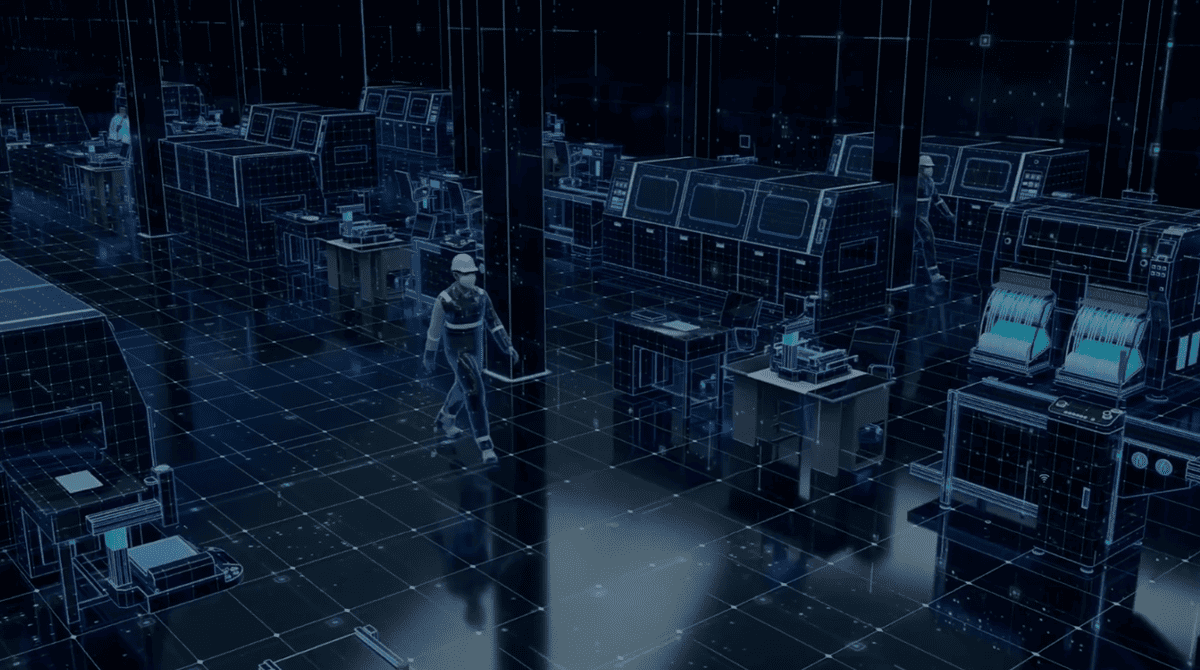
The shift goes beyond humanoid or collaborative robots. Autonomous systems of all kinds can now be trained and tested in simulations and digital twins — virtual replicas that mirror real environments of warehouses, stores, or factories. They allow companies to safely test scenarios before they ever touch the real floor. While simulations are used to design and test operations, digital twins are used to monitor and optimize them continuously. Together, they create a safe, data-driven loop, dramatically accelerating development and deployment cycles.
“For one of our clients, we developed a solution that reduced the simulation time of a production line from several hours to just five minutes per cycle,” explains Liubomyr Demkiv, Director of Robotics & Advanced Automation at SoftServe. “This approach improves efficiency, safety, and deployment speed in real-world environments, where autonomous robots need to navigate complex spaces, adapt, and work reliably alongside people.”
According to Gartner, by 2028, five of the top 10 AI vendors will offer physical AI products, while 80% of warehouses will use robotics or automation.
Multi-Agent Systems: A New Logic of Software Development
The volume of data and the complexity of digital products are growing faster than engineering teams can scale. As a result, organizations are moving toward multi-agent systems — environments where dozens of specialized agents collaborate and divide tasks much like human teams, rather than relying on a single universal AI.
“What we are witnessing with multi-agent systems is a shift from AI tools to real AI collaboration,” notes Zoriana Doshna, AVP of Technology and Head of the Gen AI Lab at SoftServe. “Agents can now take on entire stages of development — defining requirements, writing code, running tests, performing security audits. This changes the operating model: people focus on complex decision-making, while routine work is handled by specialized agents.”
Demand for such solutions is rising rapidly: SoftServe’s AI practice is growing by 85% year over year, and more than 150 experts — from Data Scientists to agentic engineering specialists — are already working on agent-driven projects.
Agents developed at SoftServe analyze technical documentation, propose architectural solutions, generate modules, create unit tests, and prepare final technical documentation. Depending on the scenario, this can reduce software development cycle time by 30–70%.
“Our goal is to bring software development to a new level with multi-agent systems, turning it from an experimental concept into a practical reality,” says Volodymyr Karpiv, R&D Director at SoftServe. “This is why we created a solution which enables not only the execution of individual agents but also orchestrating their collaboration, tracking solution quality, and automatically integrating outputs into DevOps processes. It is a foundation for AI-driven engineering in the years to come.”
Multimodal AI: A New Era of Data Comprehension
Generative models have become a standard business tool in just two years for tasks like text generation, data summarization, and communication support. However, the majority of real-world business processes rely on a wider range of data types, including photos, videos, blueprints, document scans, tables, and presentations.
This is why the next stage of development is Multimodal AI, capable of processing various data formats and unifying them into one context. For instance, SoftServe has implemented this approach with Multimodal RAG, a solution developed in partnership with NVIDIA. This technology simultaneously analyzes text, images, tables, or diagrams to formulate a comprehensive response based on all data sources. As a result, it boosts accuracy by over 70% and cuts information search time by roughly 40%. For teams managing vast document archives, this translates to a significant reduction in manual labor and substantially faster decision-making.
In the coming years, Multimodal AI is expected to become the core for process automation across finance, manufacturing, medicine, and logistics. It enables businesses to handle data the way human specialists do: by seeing the whole picture, evaluating context, and making decisions based on all available information.