


A live demo at Kaspersky’s flagship European conference, Kaspersky HORIZONS, shows facial recognition systems can identify individuals even after generative Artificial Intelligence (GenAI) tools dramatically modify facial appearance through aging and rejuvenation effects, sometimes producing images that look like entirely different people to the human eye.
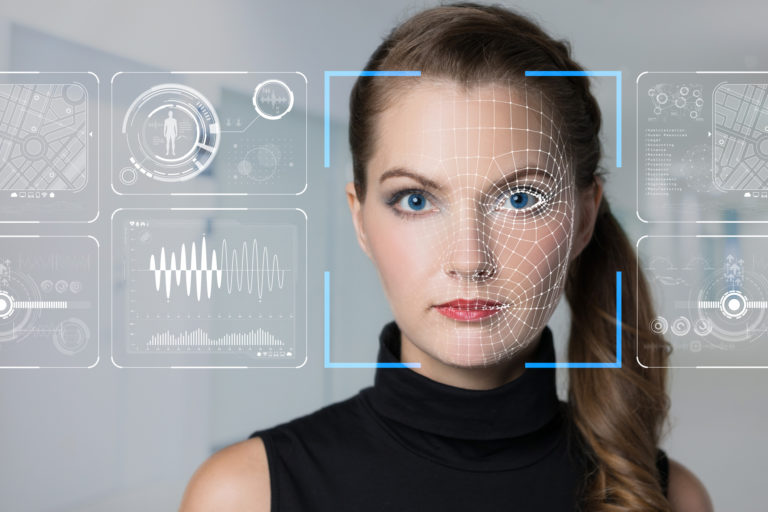
As facial recognition technologies become increasingly integrated into industries such as security, border control, healthcare, finance, and marketing, advances in generative AI are simultaneously enabling highly realistic synthetic image creation and sophisticated facial modifications. AI-powered applications are now widely used for image enhancement, retouching, face editing, and identity transformation, often producing results that appear indistinguishable from authentic photographs.
To better understand how facial verification systems respond to these transformations, Kaspersky Global Research and Analysis Team (GReAT) conducted an independent experiment using a widely adopted open-source computer vision and machine learning software library commonly used in facial recognition research and automated visual analysis systems.
During the experiment, original portrait photographs were processed using generative AI tools to simulate both aging and rejuvenation scenarios. In many cases, the resulting images appeared to human observers as entirely different individuals. Despite these substantial visual changes, the facial recognition system consistently matched the AI-modified images to the original identities across 10 independent test cases.
The experiment included AI-generated aging and rejuvenation scenarios, comparisons of visually divergent portraits, and verification using modern facial recognition software.
The findings suggest that contemporary facial recognition systems rely on deeper geometric and structural facial characteristics rather than surface-level visual similarities perceived by humans. Even when facial appearance changes significantly, recognition algorithms may still detect persistent biometric markers that remain stable across synthetic transformations.
From a cybersecurity perspective, the results highlight a growing dual-risk landscape. On one hand, they demonstrate the resilience of facial authentication systems against certain forms of AI-driven visual manipulation. On the other, they raise important questions about the potential misuse of generative AI for identity spoofing, synthetic identity creation, and the circumvention of human-based verification processes.
“Although the experiment does not represent a large-scale study, it represents a proof-of-concept for a potential AI-enabled attack that the industry should think of; it illustrates a critical practical implication: AI-generated facial transformations may preserve biometric identity even when human perception interprets the images as entirely different individuals. This creates new challenges for digital trust, identity verification, and fraud prevention in an era of rapidly evolving synthetic media,” explains Maher Yamout, Lead Security Research at Kaspersky Global Research & Analysis Team.
As synthetic media technologies continue to evolve, Kaspersky researchers emphasize that these developments require increased attention from developers of digital identity systems, cybersecurity professionals, and regulators to ensure that biometric technologies remain secure, trustworthy, and resilient against emerging AI-driven threats.