

nJoy is launching Ceres, its first battery energy storage system (BESS) range for industry. Ceres is an outdoor cabinet holding the LFP batteries, the battery management system (BMS), the energy management system (EMS), climate control, monitoring and fire protection. There are four configurations, from 64.3 to 112.5 kWh. Orders go through the nJoy partner network.
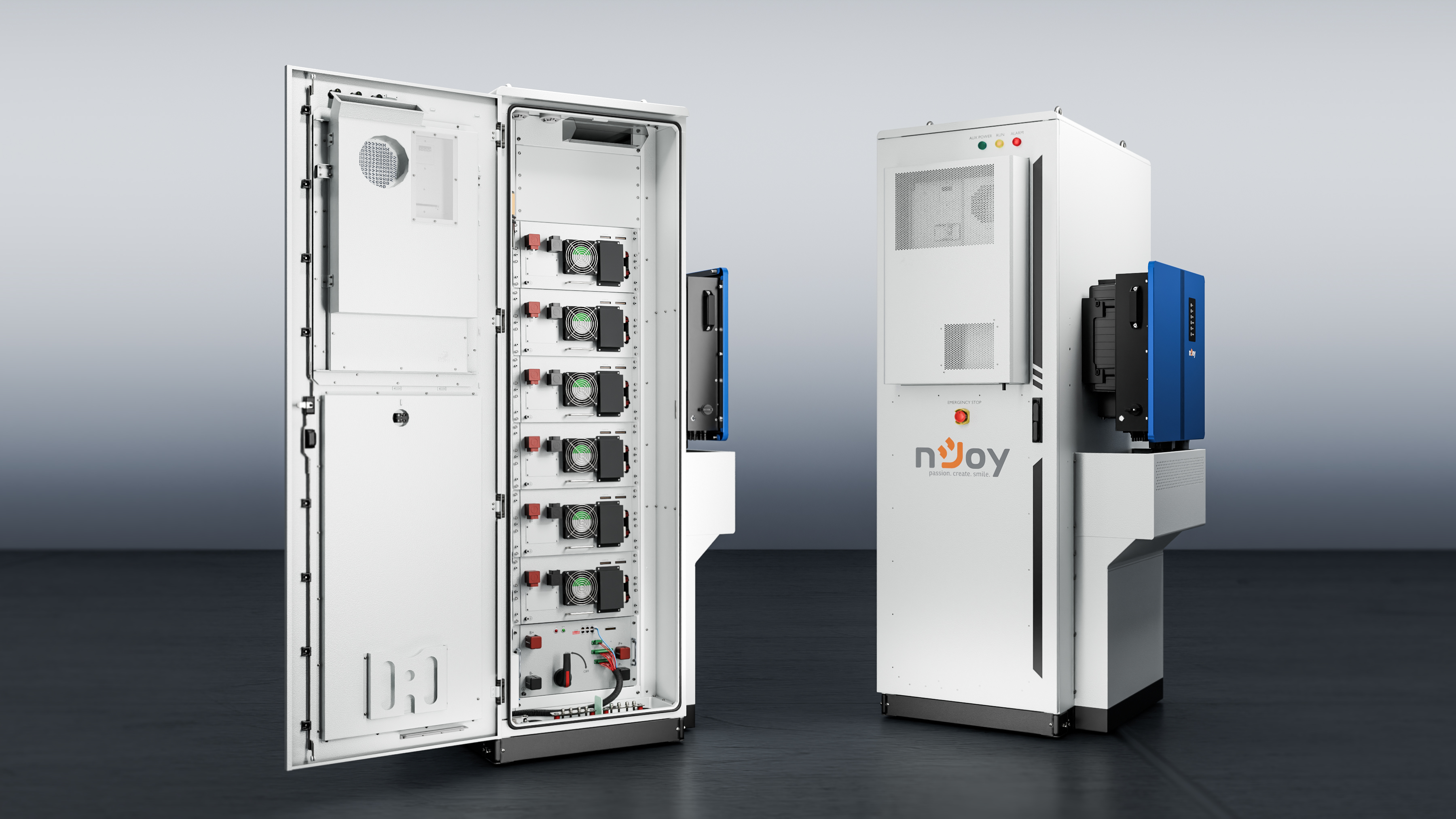
“Ceres is built to give full power when you need it, including in difficult conditions. The heatwave day when a plant’s consumption peaks is also the day with the highest tariff. That is when it has to run at rated capacity. This is why it has active climate control, protection at several levels, smoke and water-logging detection. A home system can afford to slow down. In industry, slowing down shows up on the bill.” – Adorian Demeter, founder and General Manager, Dai-Tech, the company owning the brand nJoy.
What separates industrial storage from residential
Any lithium-ion battery reduces its charge and discharge currents when temperature leaves the working range. At a house this is not a major problem: the home stays on the grid and the battery catches up later. In a commercial or industrial setting, what matters is when the slowdown arrives. Extreme temperatures come exactly on days with high consumption and high tariffs. A cabinet that reduces its power then no longer shaves the peak it was sized for, and the loss over those hours changes the payback across the life of the investment.
Ceres is built to run at rated capacity as much of the time as possible. Almost everything it has beyond a residential system comes from that.
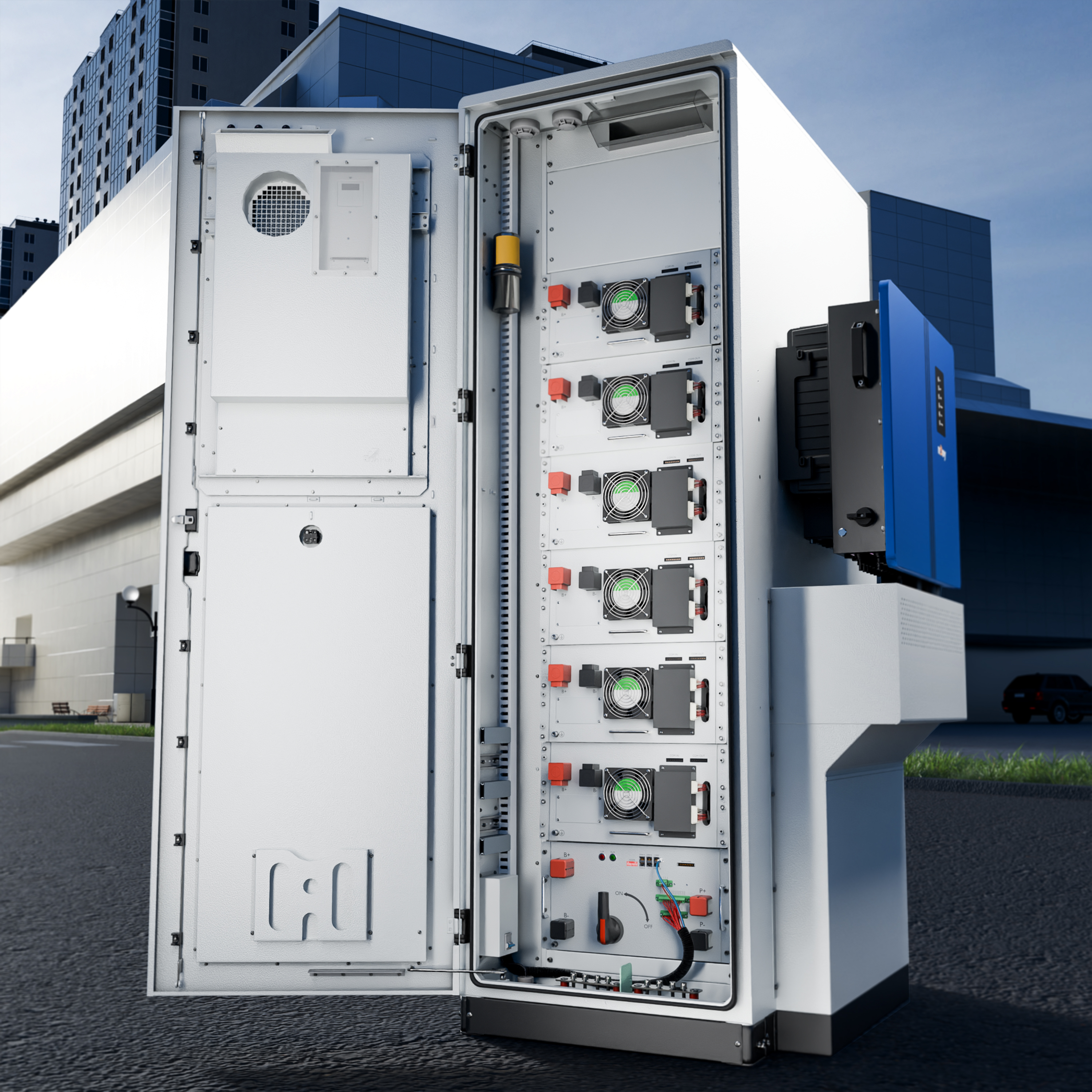
Active climate control, not just ventilation. Integrated HVAC, 1,500 W cooling and 1,000 W heating. It keeps the cells in their working range at high and low ambient temperatures. A ventilated cabinet depends more on the outside temperature.
The air inside the cabinet does not mix with the air outside. Climate control runs a closed loop: two separate air circuits that only exchange heat. Dust, salt and moisture stay out. This helps preserve the IP54 rating and the C4 corrosion class over time, particularly on sites with dust, humidity or salt air.
Protection at three levels: pack, cluster and cabinet, coordinated by the BMS. Every module has its own supervision unit. An incident at one pack is isolated without taking the cabinet down.
Water, at three levels. For an outdoor cabinet the first risk is not fire, it is water: pooling at the base after rain, condensation on terminals, a seal that gives out after a few years. The closed loop keeps it out. Dehumidification takes it out of the air. The water-logging sensor at the base reports it if present.
Detection before suppression. The cabinet carries smoke and temperature detectors. When they trip, the system raises the alarm and stops charging and discharging. If the situation gets worse, aerosol suppression starts.
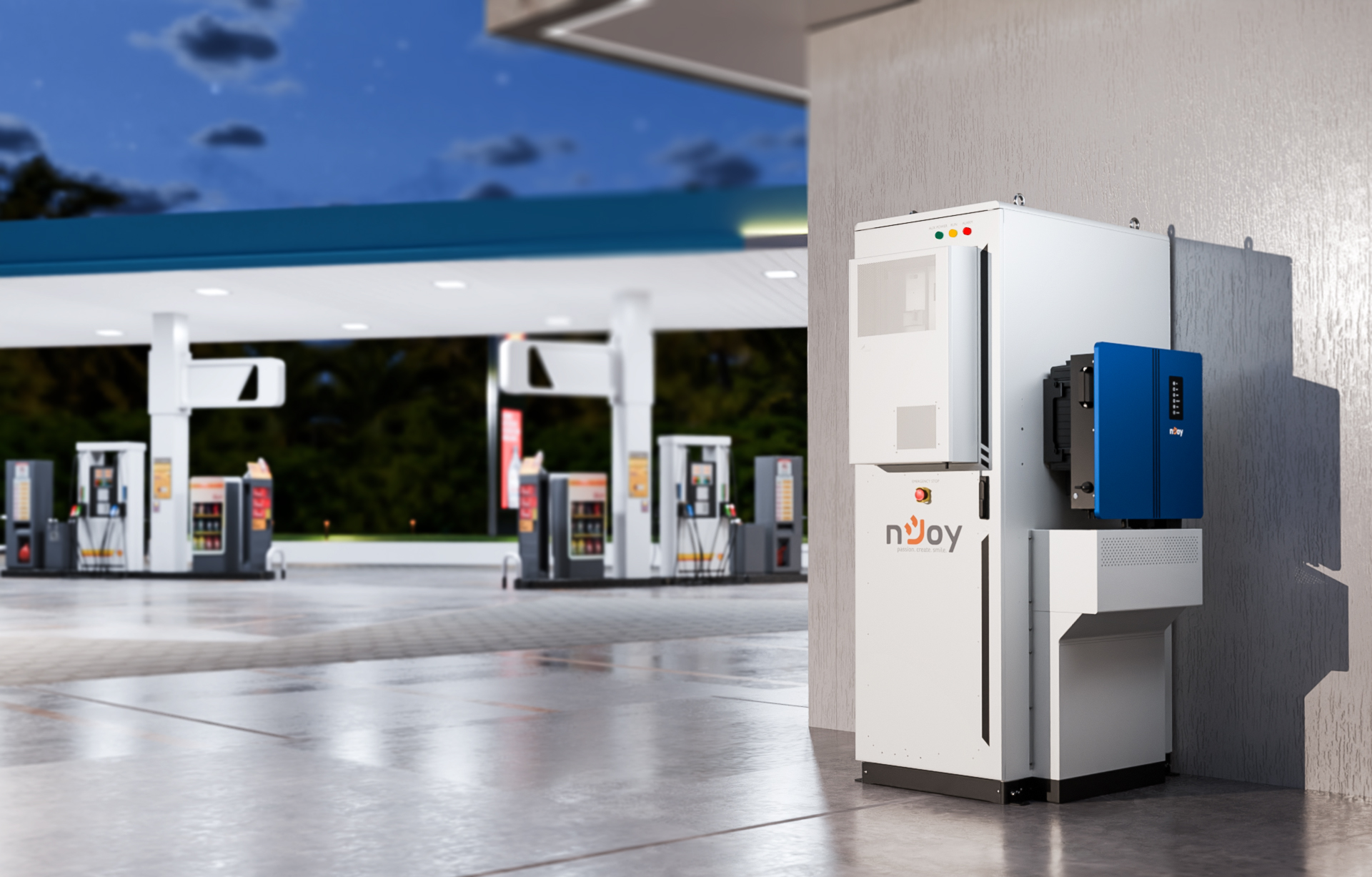
Emergency stop and key access. The stop button is on the main door and is pressed without opening the cabinet. The cabinet locks. In car parks, filling stations or yards, where people other than authorised electricians pass by, this matters for permitting.
Beyond these: protection against input reverse polarity, insulation impedance, surge, over-temperature, overload and short circuit.
Three situations where storage changes its role
Factories. Ceres stores energy from the solar array and returns it during high-consumption hours. It lowers the peaks that contracted power is priced on. Estimated service life exceeds 10 years, so payback can be calculated across the whole period.
Data centres and critical infrastructure. Ceres joins the backup scheme alongside UPS systems. Climate control and protection keep it at rated parameters. The reserve stays at the power it was sized for.
Off-grid and microgrids. Where there is no grid, Ceres stores renewable energy and delivers it on demand. The cabinet stands outdoors, IP54 and C4, with no technical room.
It is also used in retail centres, office buildings, hospitals and solar plants.
What is inside the cabinet
Ceres uses 314 Ah prismatic LFP cells, the standard format in industrial storage. The cell has the same dimensions as the previous-generation 280 Ah cell, but about 12% more capacity. The result is more energy in the same cabinet and lower losses per cycle.
The energy management system (EMS) tracks the state of the cabinet and the battery, locally and in the cloud. Communication is over RS232, RS485 and CAN. Three LEDs on the front panel show system status.
The inverter, sold separately
All configurations work with the nJoy Ascet HV 25K and 30K three-phase hybrid inverters, sold separately. The inverter is the brain of the installation: operating settings are made in its software. Peak efficiency 98.4%, battery conversion 98.0%. They accept up to 45 kW of PV power across three independent MPPT trackers, PV voltage up to 1,000 V and battery voltage from 120 to 800 V.
Availability
Ceres can be ordered from launch through nJoy partners, in the Ceres 64K, 80K, 96K and 112K configurations, across the 16 countries in Europe, the Middle East and North Africa where the brand operates. Full specifications and datasheets are at www.njoy.global.