


Artificial intelligence is bringing increasingly clear benefits to medicine worldwide. Doctors are spending less time on paperwork, while the number of patients treated each week is rising. These are the findings of the Future Health Index, the largest global study of its kind, conducted by Royal Philips. The study surveyed more than 2,000 healthcare professionals and more than 20,000 patients across 10 countries: Brazil, China, France, Germany, India, Indonesia, the Netherlands, Saudi Arabia, the United Kingdom and the United States.

The challenges identified globally are many and varied. Staff shortages, pressure on the healthcare system, and the lack of an effective way to consolidate and share medical data across specialties, doctors and institutions are all issues faced by both professionals and patients in the Romanian healthcare system, according to data recently published by the OECD, the European Commission and the Ministry of Health. At the same time, the Future Health Index 2026 by Philips shows how these issues can be addressed with the help of artificial intelligence.
A system under pressure and the areas where AI is already delivering results
According to the “State of Health in the EU: Romania Country Health Profile 2025” report, produced by the OECD and the European Observatory on Health Systems and Policies in cooperation with the European Commission, Romania has the lowest per capita health spending in the European Union. In 2023, it stood at EUR 1,800 per capita, adjusted for purchasing power. That is less than half the EU average of EUR 3,832, and only 5.8% of GDP, compared with the European average of 10%. Life expectancy in Romania is 5.1 years below the EU average, and its rates of preventable and treatable mortality are among the highest in the EU.
In a country where resources are limited, the Future Health Index 2026 shows that improvements are visible in countries where AI is increasingly used in healthcare. 34% of healthcare leaders report that AI implementation is already generating budget savings, and 62% say the benefits of the investment match or exceed the costs.
Staff shortages and doctor emigration, while AI increases capacity and reduces burnout
Although Romania produces far more medical and nursing graduates each year than the EU average, the OECD report shows that staff shortages persist because many graduates choose to work abroad. Many experienced specialists also leave their jobs in Romania to move abroad. The Future Health Index 2026 shows that AI can help address this pressing problem: 50% of healthcare professionals say AI has increased their capacity to see more patients, with a median increase of 8 additional patients per week, and 71% say AI helps them streamline their workflows. Nearly half of respondents reported saving at least 132 hours per year, the equivalent of more than three working weeks.
Burnout is one of the best-known drivers of staff emigration. In the study, 50% of clinicians say AI has improved their work-life balance, 49% say they feel less stressed, and 47% say they work less overtime or take less work home.
Narrowing the urban-rural gap in access to healthcare
Data from the National Health Insurance House (CNAS) showed that, as of December 31, 2025, Romania had 1,055 localities with a shortage of family doctors, and 1,473 more doctors were needed to meet existing demand. 75% of Future Health Index 2026 respondents say AI can help reduce differences in quality between types of healthcare services and improve access in underserved and rural areas. Among patients, 56% believe AI will improve care in rural areas, and 58% say it can make it easier for people facing difficulties to get medical help.
Using AI to filter emergency cases
Emergency departments are under very heavy pressure, again because of the shortage of primary care. According to CNAS data, of the 3,652,042 hospital discharges in 2025, fewer than one third involved a referral from a family doctor, while more than 2 million cases came in directly through emergency services. Globally, 60% of patients in the Future Health Index 2026 say generative AI has helped them recognize when they need to see a doctor, guiding them toward the right care option.
Systems that don’t talk to each other
According to the Ministry of Health’s new explanatory memorandum for the National Digital Health Strategies 2026–2030, “the delivery of healthcare services is affected by a lack of funding, a lack of staff and a lack of information.” The Future Health Index 2026 shows that a shift is already under way globally: 57% of clinicians report better access to consolidated patient data across care teams, and 63% see faster delivery of diagnostic results. The study describes AI’s emerging role as a “cognitive layer” that brings together fragmented information from multiple sources, such as medical records, imaging and clinical history. This points to a solution for the kind of fragmentation the Romanian strategy aims to eliminate through a single electronic patient record.
In addition, in October 2024 the Romanian Government adopted a memorandum on making fully smart hospitals operational. It provides for integrating the electronic patient record, telemedicine, automation, Big Data systems and artificial intelligence into clinical decision-making.
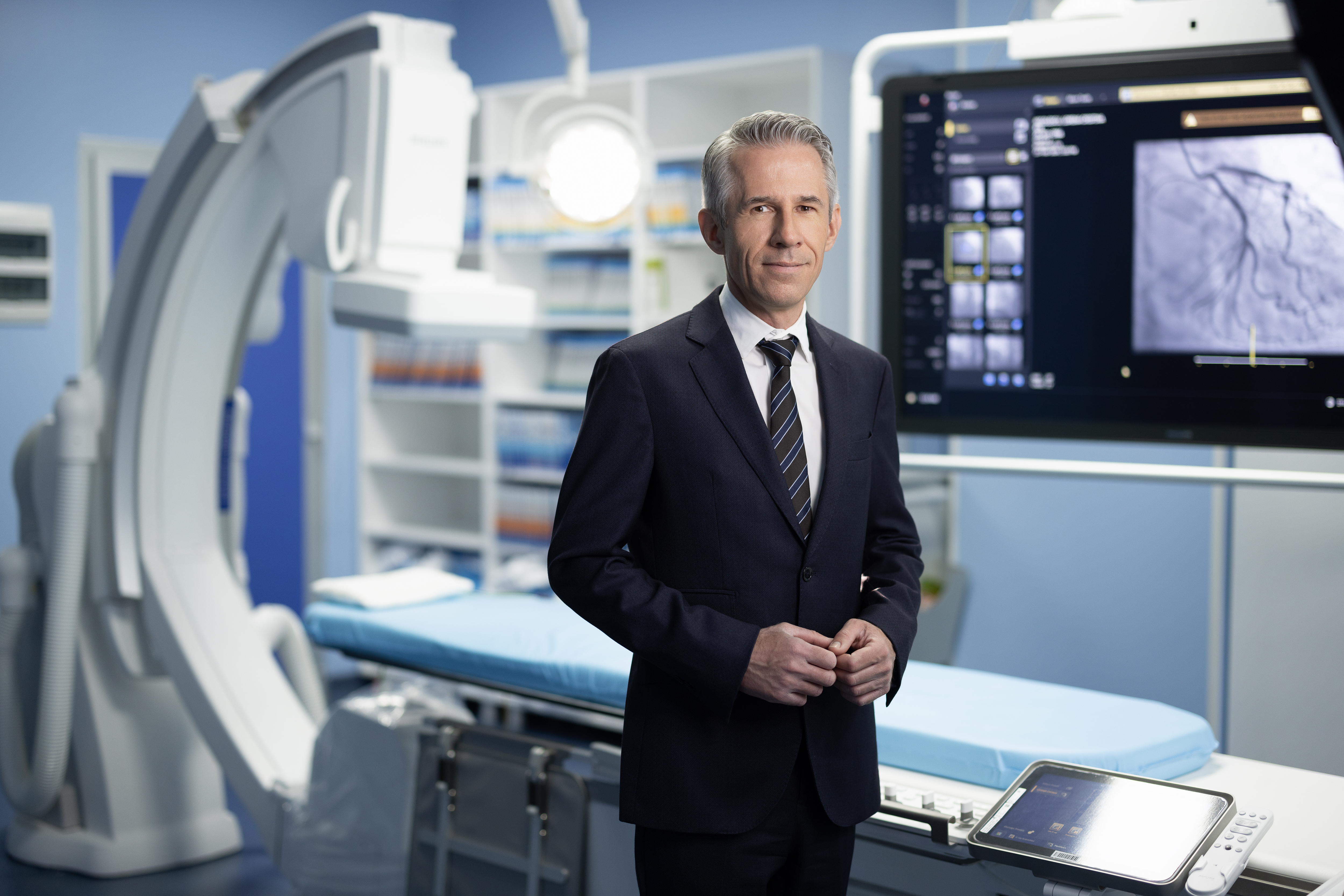 “The Future Health Index results show that artificial intelligence in medicine is evolving from a tool used in isolation for a single task into one integrated into daily clinical practice, bringing numerous benefits. Philips supports this transition with solutions that help hospitals and clinics better integrate patient data and support clinical decisions, so that doctors can reclaim their time for what matters most: the patient in front of them. However, we must bear in mind that AI is not here to replace the specialist, but to support them. Final judgment and responsibility must remain human,” says Șerban Isopescu-Weber, Leader of the Medical Equipment and Solutions Division, Philips Romania.