


The courier platform eAWB is expanding its international services to more than 200 countries and territories outside the European Union. Companies and individuals can now send parcels to destinations such as the United States, the United Kingdom, Canada, China, Switzerland, the Republic of Moldova, Turkey, Australia and many more, in just a few clicks.
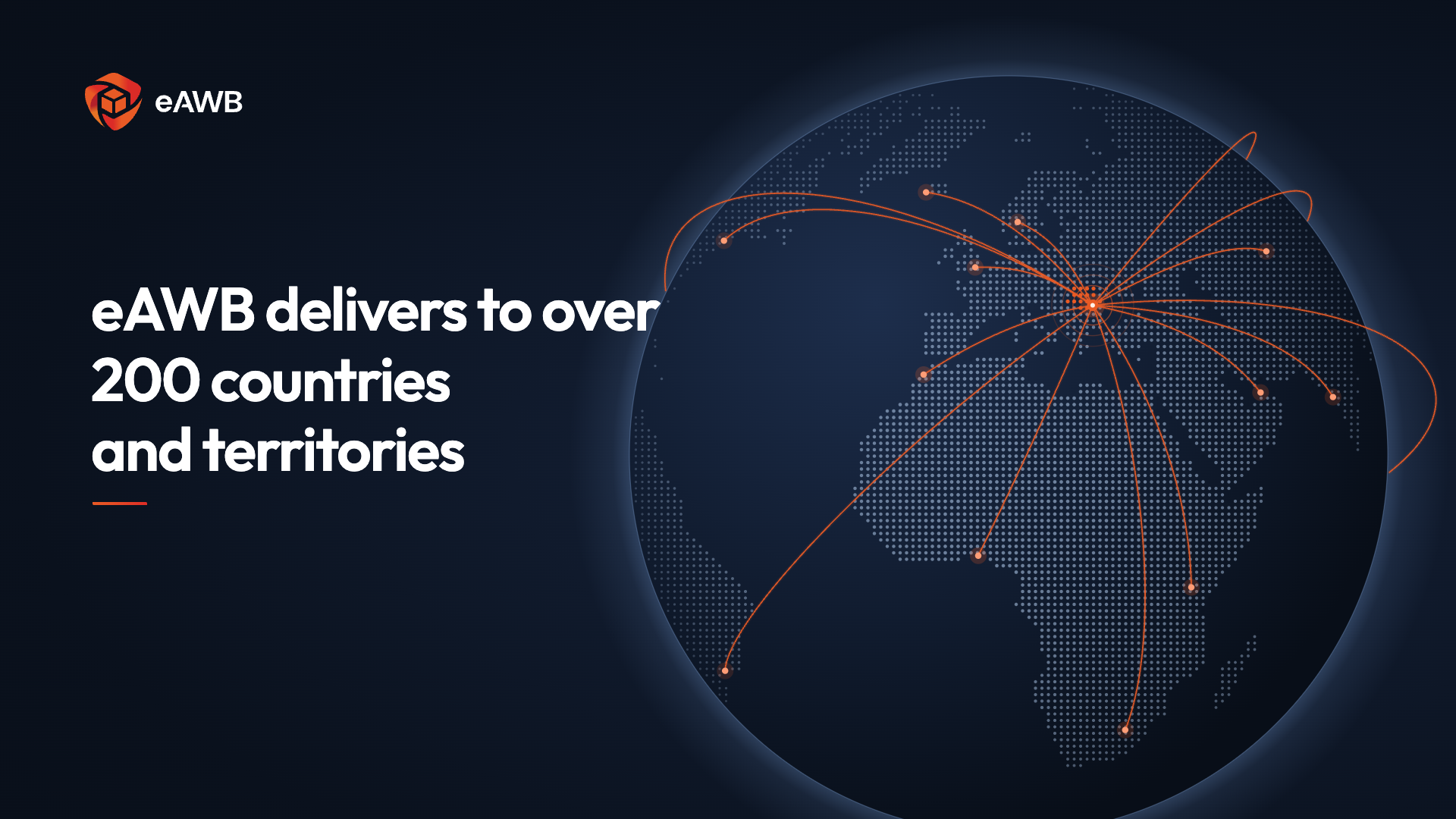
Until now, eAWB facilitated international deliveries between Romania and the European Union member states. With this new service, the company is extending its coverage globally and bringing together, in a single digital process, the selection of the transport solution, the completion of customs documents, the estimation of duties and shipment tracking.
The new solution is launched with three international couriers already integrated into the platform.
Depending on the country of origin, the destination and the type of shipment, users can choose road or air transport. Cargo freight services and palletised transport are also available on certain routes. In addition, for 36 of the countries and territories covered, customers also have access to a premium service, with delivery on the next working day after the shipment is collected, depending on the route, the pickup time and the completion of customs formalities.
 “For many Romanian companies, expanding beyond the European market is still limited by the complexity of deliveries and customs formalities. Our vision is to reduce these barriers and simplify access to global transport, also for entrepreneurs and online stores that are just starting out. We believe technology can remove a significant part of the logistical and customs complexity, offering entrepreneurs more predictability,” said Daniel Neacșu, co-founder of eAWB.
The services are not available in countries subject to international sanctions or in destinations where transport operations are suspended for security reasons.
The new services can be accessed online, on the eAWB website, as well as on mobile through the iOS and Android apps. Online stores, in turn, can integrate the international delivery options into their own order flows in WooCommerce, OpenCart, Shopify or PrestaShop, so that shipments to countries outside EU can be processed and managed within the same digital ecosystem.
AI-simplified customs formalities, a first in Romania
 To simplify shipments outside the European Union, eAWB is introducing, for the first time in Romania, an artificial intelligence-based feature that helps users identify the HS code required for the customs declaration.
“Identifying the right HS code was perhaps one of the most difficult steps in delivering products for export. This step involved going through extensive customs nomenclatures to find the 6-digit code that exactly matches the product being shipped, and repeating the process for each sub-category. With the AI tool developed on the eAWB platform, identifying the HS code takes much less time and human error is also eliminated, with positive effects on the customs process,” explains Radu Meteș, co-founder of eAWB.
How it works: The customer describes the contents of the shipment and the system recommends the appropriate code, removing the difficulty of selecting it from approximately 5,600 existing categories. Based on this HS code, the customs duties for the products shipped can be calculated much faster, and senders get a clearer picture of the total cost of transport.
Online stores that have integrated eAWB can also choose one of two ways of handling customs duties and formalities: DAP or DDP.
The international expansion continues eAWB’s strategy of digitising courier and transport processes. By integrating multiple couriers and services into a single platform, the company aims to simplify the selection, ordering and management of domestic and international deliveries.
The context is favourable for eAWB, with the global courier and transport market estimated to exceed USD 1 trillion this year and expected to reach USD 2.976 trillion by 2033, according to a Grand View Research report, driven by the growth of international e-commerce, the development of omnichannel retail models and rising customer expectations for fast delivery services.