

The 8th edition of DataCenter Forum Romania 2026, held on May 7 in Bucharest and bringing together over 850 industry leaders and experts, marked a fundamental paradigm shift: the future of data centers is no longer defined by construction capacity, but by rapid and predictable access to power.
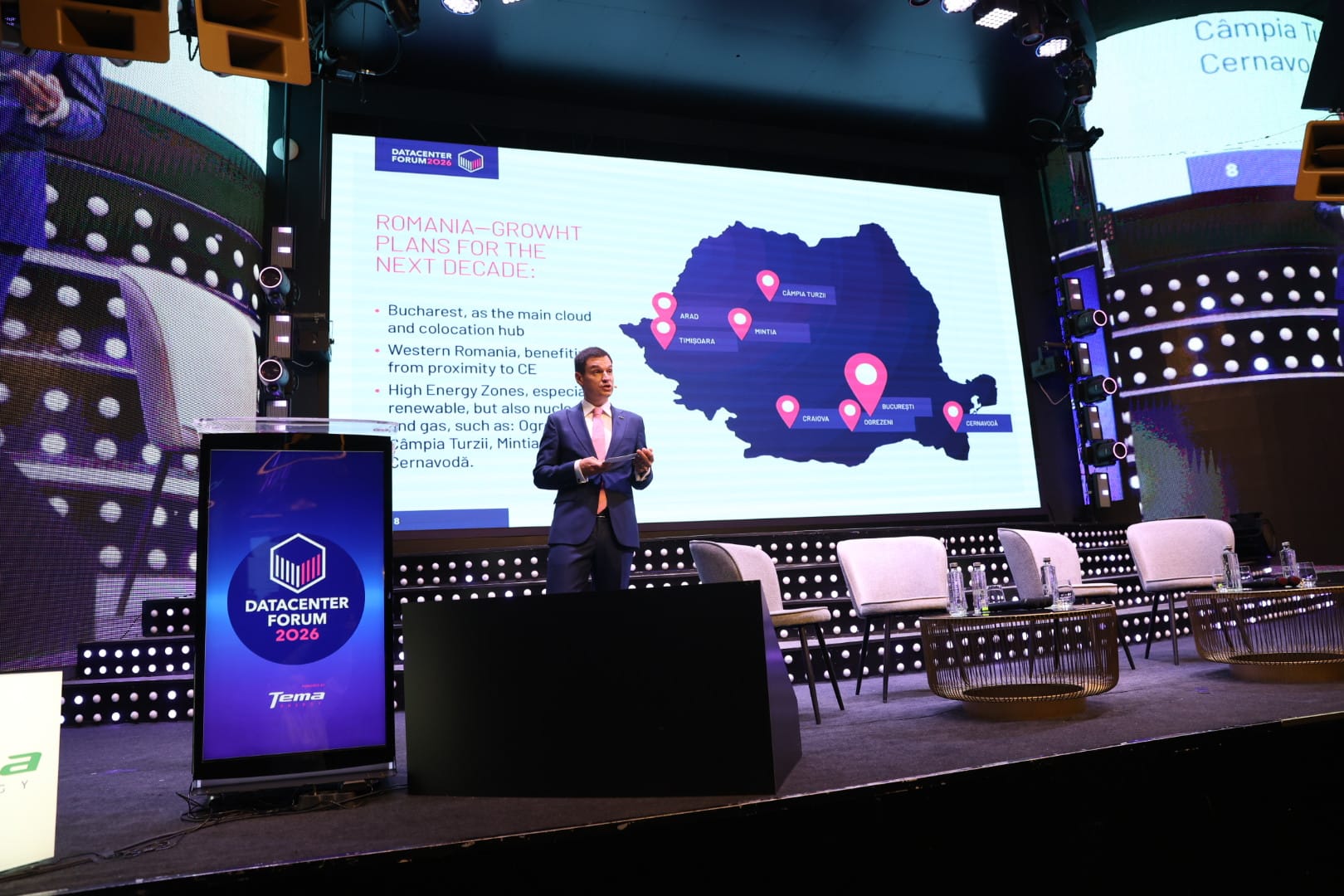
In a European market increasingly constrained by electricity shortages, Romania has the opportunity to become the next strategic frontier for Artificial Intelligence (AI) infrastructure, much like Norway. The Nordic country, although having had a relatively modest presence on the European data center map in the past, has attracted global attention through the development of major projects such as Stargate Narvik – an AI hyperscale initiative in northern Norway, supported by advanced technology ecosystems and hydropower. The project targets a capacity of over 230 MW of renewable energy, destined to host approximately 100,000 NVIDIA GPUs for advanced artificial intelligence workloads.
Following this model of sudden acceleration in positioning within a global AI market, Romania could follow a similar path through an initial project of over 100 MW, with the potential to act as a catalyst for hyperscale investments and AI infrastructure in the region.
Thus, the main lesson of the forum is clear: in the AI economy, the countries that manage to rapidly transform available energy into digital capacity become the new power centers of Europe.
From “Speed to Market” to “Speed to Power”
While mature markets in Western Europe (the FLAP zone) face grid connection delays that can reach 5-7 years, Romania is in a privileged position, having the capacity to offer immediate solutions.
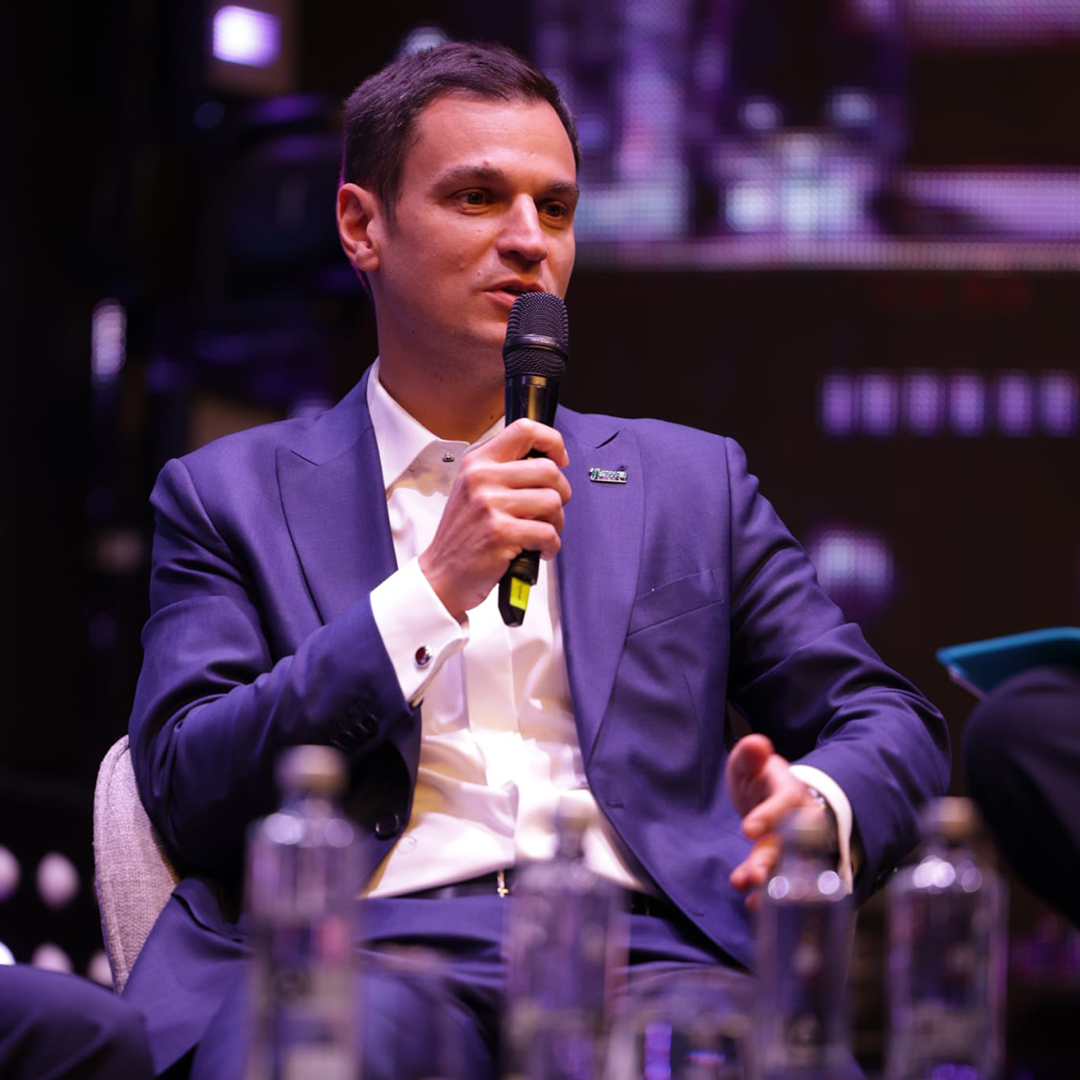 Mihai Manole, CEO of Tema Energy and organizer of the DataCenter Forum, summarized the market’s clear direction: “Today, the key element in the development of the DataCenter market is Speed to Power. Investors go where energy is already available and where connection time is minimal. Romania has energy hubs, particularly in the western and central parts of the country, where it can provide up to 500 MW almost immediately. This is our ‘ticket’ to attract Hyperscale projects.”
AI rewrites the rules of the industry: Perspectives from global leaders
The transition to industrial-scale facilities of the “AI Factories” type completely changes the consumption profile, infrastructure, and geopolitical stakes of data centers, as pointed out by the forum’s international guests:
• Rod Evans, Vice President for Supercomputing, Cloud and AI at NVIDIA, explained that the requirements of latest-generation technologies exponentially increase consumption per rack, making liquid cooling an absolute necessity, not an option. He also warned about the importance of digital sovereignty, emphasizing that states must become producers of AI infrastructure, not just consumers, in order to protect their own data and national culture.
• Jonathan Berney, founder of Accelerated Infrastructure Capital (AIC), highlighted the energy bottleneck in Western Europe, where the power needed for new AI projects is lacking. He pointed out that Romania has a critical window of opportunity of about 12 months, during which it can use its energy abundance to attract global clients, mentioning the ClusterPower project in Craiova as an example of an “anchor” investment, already prepared for AI.
Romania’s strategic assets
Currently, data centers account for only 0.2% of national energy consumption in Romania, compared to 6% in the Netherlands or 24% in Ireland, leaving huge room for development. Among the assets that can transform the local market into a “Hyperscale” destination are:
• Uncongested grid zones and hundreds of megawatts accessible through rapid connection agreements.
• Realistic implementation timelines, with projects potentially becoming operational in 18–20 months.
• A diversified energy mix, strongly supported by renewable projects and storage solutions.
• Human capital, with Romanian engineers already being an essential force in operating major European hubs.
Reaching its eighth edition, DataCenter Forum 2026 brought over 36 experts to the stage and reconfirmed itself as the main platform dedicated to digital infrastructure and the future of AI in the region. The event was organized by Tema Energy with the support of global and local strategic partners, including world leaders in data center infrastructure such as HiRef, Legrand, EnerSys, Vertiv, Schneider Electric, Rittal, as well as some of the biggest players in the local data center industry – Vodafone Business, M247 Global, NXDATA, and Voxility.